.png?v=trim20261018)
1CONN Creative Reklam Ajansı
Sektörünüzle ilgili genel ve yerel bilgileri büyük bir titizlikle araştırıyor, sizin için gerçekleştireceğimiz çalışmalarımıza bu bilgiler ışığında yön veriyoruz. İlk düşündüğümüz; “Biz, bu markaya ne katabiliriz?”
MedGellan: LLM-Generated Medical Guidance to Support Physicians
Medical decision-making is a critical task, where errors can result in serious, potentially life-threatening consequences. While full automation remains challenging, hybrid frameworks that combine machine intelligence with human oversight offer a practical alternative. In this paper, we present MedGellan, a lightweight, annotation-free framework that uses a Large Language Model (LLM) to generate clinical guidance from raw medical records, which is then used by a physician to predict diagnoses. MedGellan uses a Bayesian-inspired prompting strategy that respects the temporal order of clinical data. Preliminary experiments show that the guidance generated by the LLM with MedGellan improves diagnostic performance, particularly in recall and $F_1$ score.
Human-LLM Dialogue Improves Diagnostic Accuracy in Emergency Care
Clinical decision-making in emergency medicine demands rapid, accurate diagnoses under uncertainty. Despite benchmark progress, evidence for LLMs as interactive aids in live physician workflows remains sparse. MedSyn lets physicians iteratively query an LLM provided with the full clinical record while initially viewing only the chief complaint. Seven physicians (three seniors, four residents) completed baseline and AI-assisted sessions across 52 MIMIC-IV cases stratified by difficulty. Blinded evaluation showed residents' Hard-case correctness rose from 0.589 to 0.734; difficulty-standardised completely-correct rates confirmed a medium effect (Δ = 0.092; p = 0.071; d = 0.47). Automated metrics corroborated these gains: standardised any-match accuracy improved by 0.156 (p < 0.0001), and residents showed the largest F1 gain (Δ = 0.138; p < 0.0001). Dialogue analysis revealed expertise-dependent strategies (seniors asked targeted, hypothesis-driven questions; residents relied on broader queries) and cross-expertise concordance increased (Δ = 0.145; p < 0.0001). Interactive LLM support meaningfully enhances diagnostic reasoning.
Capacity Planning for Effective Cohorting of Dialysis Patients during the Coronavirus Pandemic: A Case Study
Chronic dialysis patients have been among the most vulnerable groups of the society during the coronavirus (COVID-19) pandemic as they need regular treatments in a hospital environment, facing infection risk. Moreover, the demand for dialysis resources has significantly increased since many COVID-19 patients need acute dialysis due to kidney failure. In this study, we address capacity planning decisions of a hemodialysis clinic located within a major hospital in Istanbul, designated to serve both infected and uninfected patients during the pandemic with limited resources (i.e., dialysis machines). The hemodialysis clinic applies a three-unit cohorting strategy to treat four types of patients in separate units and at different times to mitigate infection spread risk among patients. Accordingly, at the beginning of each week, the clinic needs to determine the number of available dialysis machines to allocate to each unit that serves different patient cohorts. Given the uncertainties in the number of different types of patients that will need dialysis, it is a challenge to allocate the scarce dialysis resources effectively by evaluating which capacity configuration would minimize the …
Almost Ricci Solitons on Class $\mathcal A$ Hypersurfaces of Product Spaces
In this paper, we study hypersurfaces in the product spaces $\mathbb{Q}_ε^3 \times \mathbb{R}$ for which the tangential component $T$ of the vector field $\frac{\partial}{\partial t}$ is a principal direction, where $\mathbb{Q}_ε^3$ denotes the three-dimensional non-flat Riemannian space form with sectional curvature $ε= \pm 1$, and $\frac{\partial}{\partial t}$ is the unit vector field tangent to the $\mathbb{R}$-factor. We obtain a local classification of hypersurfaces with three distinct principal curvatures satisfying specific functional relations. Then, we determine the necessary and sufficient conditions for such hypersurfaces to admit an almost Ricci soliton structure with potential vector field $T$. Finally, we prove that the only hypersurfaces admitting such solitons are rotational, by showing that the constructed examples with three distinct principal curvatures do not admit almost Ricci solitons.
Rastall gravity extension of the standard $Λ$CDM model: theoretical features and observational constraints
We present a detailed investigation of the Rastall gravity extension of the standard $Λ$CDM model. We review the model for two simultaneous modifications of different nature in the Friedmann equation due to the Rastall gravity: the new contributions of the material (actual) sources (considered as effective source) and the altered evolution of the material sources. We discuss the role/behavior of these modifications with regard to some low redshift tensions, including the so-called $H_0$ tension, prevailing within the standard $Λ$CDM. We constrain the model at the level of linear perturbations, and obtain the first constraints through a robust and accurate analysis using the latest full Planck CMB data, with and without including BAO data. We find that the Rastall parameter $ε$ (null for general relativity) is consistent with zero at 68\% CL (with a tendency towards positive values, $-0.0001 < ε< 0.0007$ (CMB+BAO) at 68\% CL), which in turn implies no significant statistical evidence for deviation from general relativity, and also a precision of $\mathcal{O}(10^{-4})$ for the coefficient $-1/2$ of the term $g_{μν}R$ in the Einstein field equations of general relativity …
SSLG4: A Novel Scintillator Simulation Library for Geant4
This study introduces a new Scintillator Simulation Library called SSLG4 for the Geant4 Monte Carlo simulation package. With SSLG4, we aim to enhance efficiency and accelerate progress in optical simulations within the Geant4 framework by simplifying scintillator handling and providing a rich repository of scintillators. The SSLG4 enables users to quickly include predefined scintillator materials in their simulations without requiring manual definition. The library initially contains 68 scintillators, consisting of 58 organic and 10 inorganic types. Most of these scintillators are selected from the catalogs of several scintillator manufacturers, notably Eljen and Luxium. Other scintillators are included based on their widespread use across various physics domains. The library stores optical data of scintillators in ASCII files with .mac and .txt extensions, enabling users to add, remove, or modify properties of scintillators at runtime of their applications. In addition, we made all the scintillator data available in the library on a dedicated page of our website to ensure convenient access for all users.
Paracompositionality, MWEs and Argument Substitution
Multi-word expressions, verb-particle constructions, idiomatically combining phrases, and phrasal idioms have something in common: not all of their elements contribute to the argument structure of the predicate implicated by the expression. Radically lexicalized theories of grammar that avoid string-, term-, logical form-, and tree-writing, and categorial grammars that avoid wrap operation, make predictions about the categories involved in verb-particles and phrasal idioms. They may require singleton types, which can only substitute for one value, not just for one kind of value. These types are asymmetric: they can be arguments only. They also narrowly constrain the kind of semantic value that can correspond to such syntactic categories. Idiomatically combining phrases do not subcategorize for singleton types, and they exploit another locally computable and compositional property of a correspondence, that every syntactic expression can project its head word. Such MWEs can be seen as empirically realized categorial possibilities, rather than lacuna in a theory of lexicalizable syntactic categories.
BLiMPPI: Benchmark of Linguistic Minimal Pairs for Polarity Items
Negative polarity items (NPIs), such as "anymore" and "ever", are grammatical only in select environments, predominantly in the context of negation. Because their grammaticality depends on both syntax and semantics, they have a rich, multilingual literature in theoretical linguistics, yet work on NPIs in language models is almost entirely confined to English. We introduce BLiMPPI, a multilingual evaluation suite of over 12,000 NPI minimal pairs in 33 languages, built by a pipeline that discovers NPIs in Universal Dependencies (UD) treebanks, labels their licensing environments, and perturbs these into minimal pairs. Evaluating 12 multilingual and 2 monolingual models alongside n-gram baselines, we find that multilingual models struggle most with lower-resource languages and with pairs that are not n-gram solvable. We further examine the effects of NPI typology, language family, licensing variability, and NPI-licenser distance. Data: https://github.com/arzuburcuguven/blimppi-data
Accuracy Booster: Enabling 4-bit Fixed-point Arithmetic for DNN Training
The unprecedented demand for computing resources to train DNN models has led to a search for minimal numerical encoding. Recent state-of-the-art (SOTA) proposals advocate for multi-level scaled narrow bitwidth numerical formats. In this paper, we show that single-level scaling is sufficient to maintain training accuracy while maximizing arithmetic density. We identify a previously proposed single-level scaled format for 8-bit training, Hybrid Block Floating Point (HBFP), as the optimal candidate to minimize. We perform a full-scale exploration of the HBFP design space using mathematical tools to study the interplay among various parameters and identify opportunities for even smaller encodings across layers and epochs. Based on our findings, we propose Accuracy Booster, a mixed-mantissa HBFP technique that uses 4-bit mantissas for over 99% of all arithmetic operations in training and 6-bit mantissas only in the last epoch and first/last layers. We show Accuracy Booster enables increasing arithmetic density over all other SOTA formats by at least 2.3x while achieving state-of-the-art accuracies in 4-bit training.
Effective Interplay between Sparsity and Quantization: From Theory to Practice
The increasing size of deep neural networks (DNNs) necessitates effective model compression to reduce their computational and memory footprints. Sparsity and quantization are two prominent compression methods that have been shown to reduce DNNs' computational and memory footprints significantly while preserving model accuracy. However, how these two methods interact when combined together remains a key question for developers, as many tacitly assume that they are orthogonal, meaning that their combined use does not introduce additional errors beyond those introduced by each method independently. In this paper, we provide the first mathematical proof that sparsity and quantization are non-orthogonal. We corroborate these results with experiments spanning a range of large language models, including the OPT and LLaMA model families (with 125M to 8B parameters), and vision models like ViT and ResNet. We show that the order in which we apply these methods matters because applying quantization before sparsity may disrupt the relative importance of tensor elements, which may inadvertently remove significant elements from a tensor. More importantly, we show that even if applied in the …
1Klinik CMS Web Yönetim Sistemi
Yeni Nesil Klinik Deneyimi. Bilim, teknoloji ve estetiği modern hasta deneyimiyle bir araya getiriyoruz. Dijital planlama, kişiye özel tedavi yaklaşımı ve güçlü hasta iletişimi.
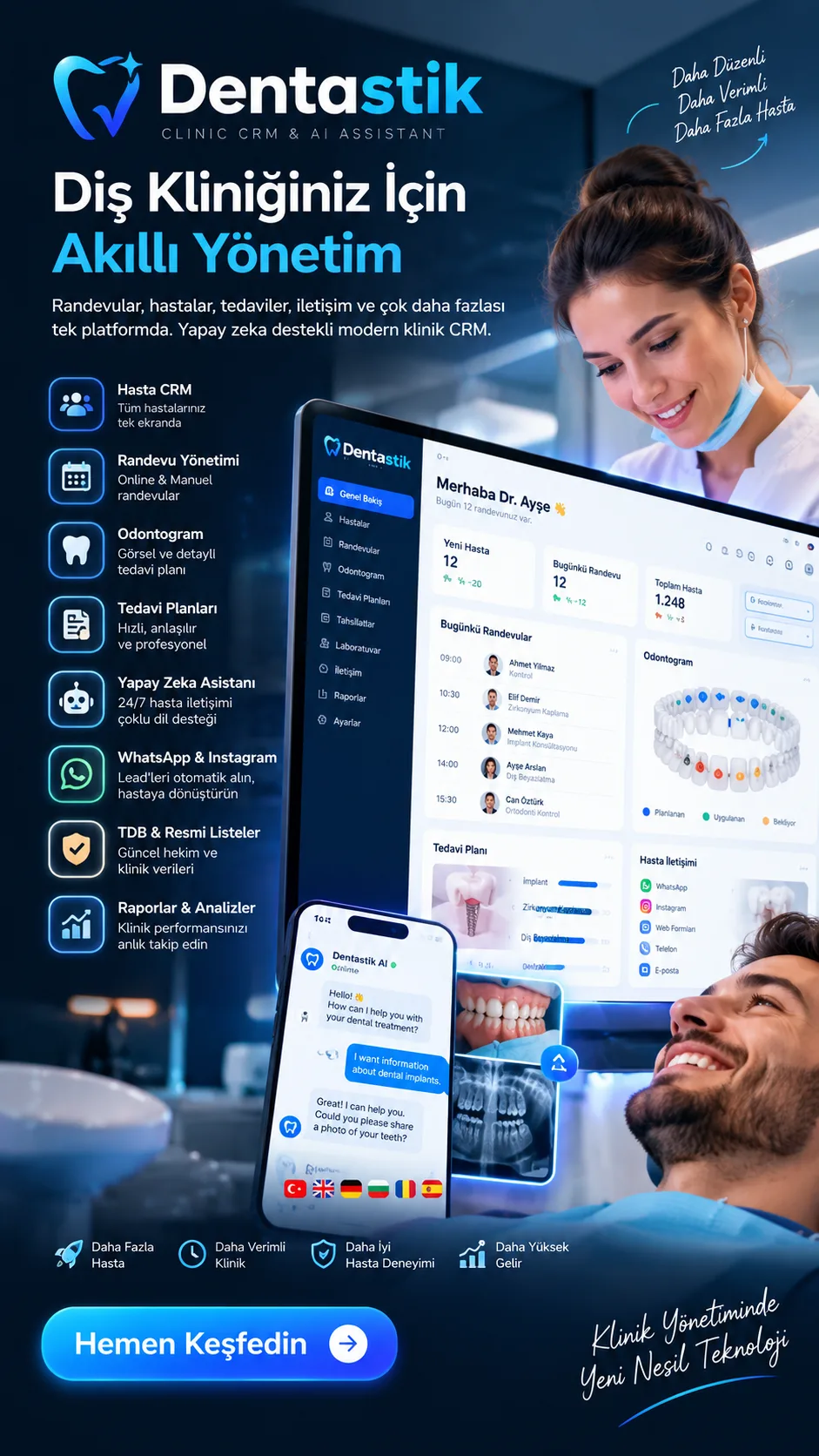
Dentastik Klinik Yönetimi
Kliniğinizin tüm dünyası Tek bir akış. İlk temastan son kontrole. Satıştan tedaviye. Birbirine bağlı her an, tek ekosistemde.